

Delphi
Vehicle diagnostics platform for the automotive industry — migrated from a legacy system to a modern Next.js architecture, improving performance, maintainability, and scalability.
At a Glance
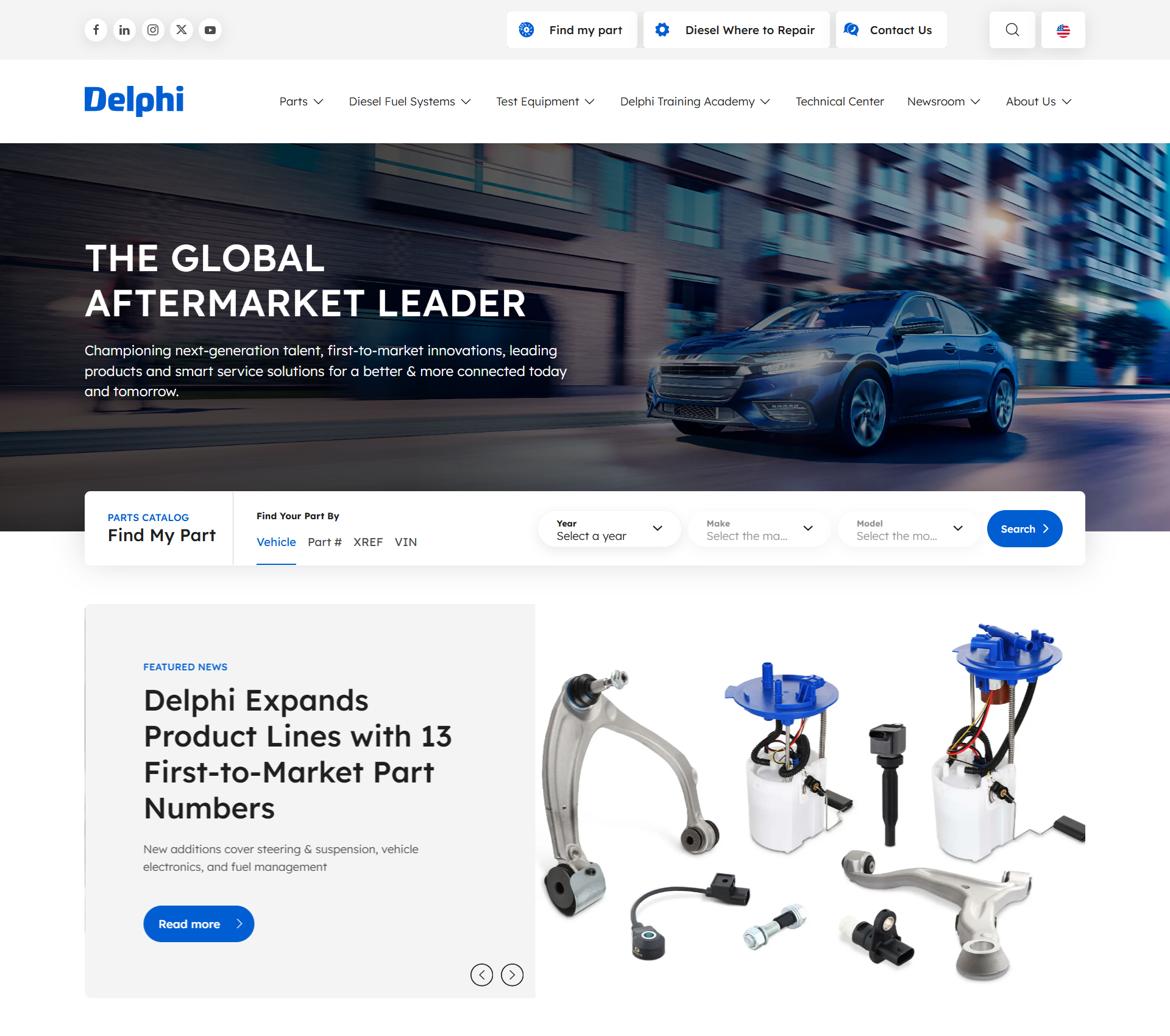
Led the frontend migration of Delphi Autoparts' public platform from a WordPress monolith to a modern Next.js architecture. Delphi is a global aftermarket leader with presence in 150+ countries and a network of 2,750+ service centers, now operating under PHINIA Inc. My focus was on rebuilding the product pages and main navigation — the highest-traffic sections of the site — while leading a small frontend team through the transition.
Why This Project Matters
Migrating a live, high-traffic platform for a global automotive company isn't a greenfield project — it's an exercise in managing complexity, backward compatibility, and team coordination under real-world constraints. The challenge wasn't just building new pages in Next.js; it was doing it incrementally alongside a running WordPress site, preserving SEO equity, and shipping with a small team on a tight timeline. The result was a faster, more maintainable frontend foundation that the team could continue building on after my engagement ended.
Technologies Used
Frontend: Next.js, React, TypeScript, Tailwind CSS
Data: REST APIs, PostgreSQL
Legacy: WordPress (migrated from)
Other: SSR/SSG, responsive design, SEO optimization, component library architecture
What I Built
1. WordPress → Next.js Migration
Led the architectural migration of the public-facing platform from WordPress to Next.js. The legacy WordPress setup had grown into a monolith with performance bottlenecks, tightly coupled templates, and limited flexibility for the product and content teams.
- Defined the migration strategy: identified which pages to rebuild first based on traffic and business impact, prioritizing product pages and main navigation
- Architected the Next.js project structure with a focus on reusability — shared layouts, dynamic routing for product categories, and a component library that the team could extend independently
- Implemented server-side rendering (SSR) and static site generation (SSG) to improve page load times and SEO performance compared to the WordPress setup
- Ensured backward compatibility: URL structure, redirects, and meta tags preserved to avoid SEO regression during the transition
2. Product Pages
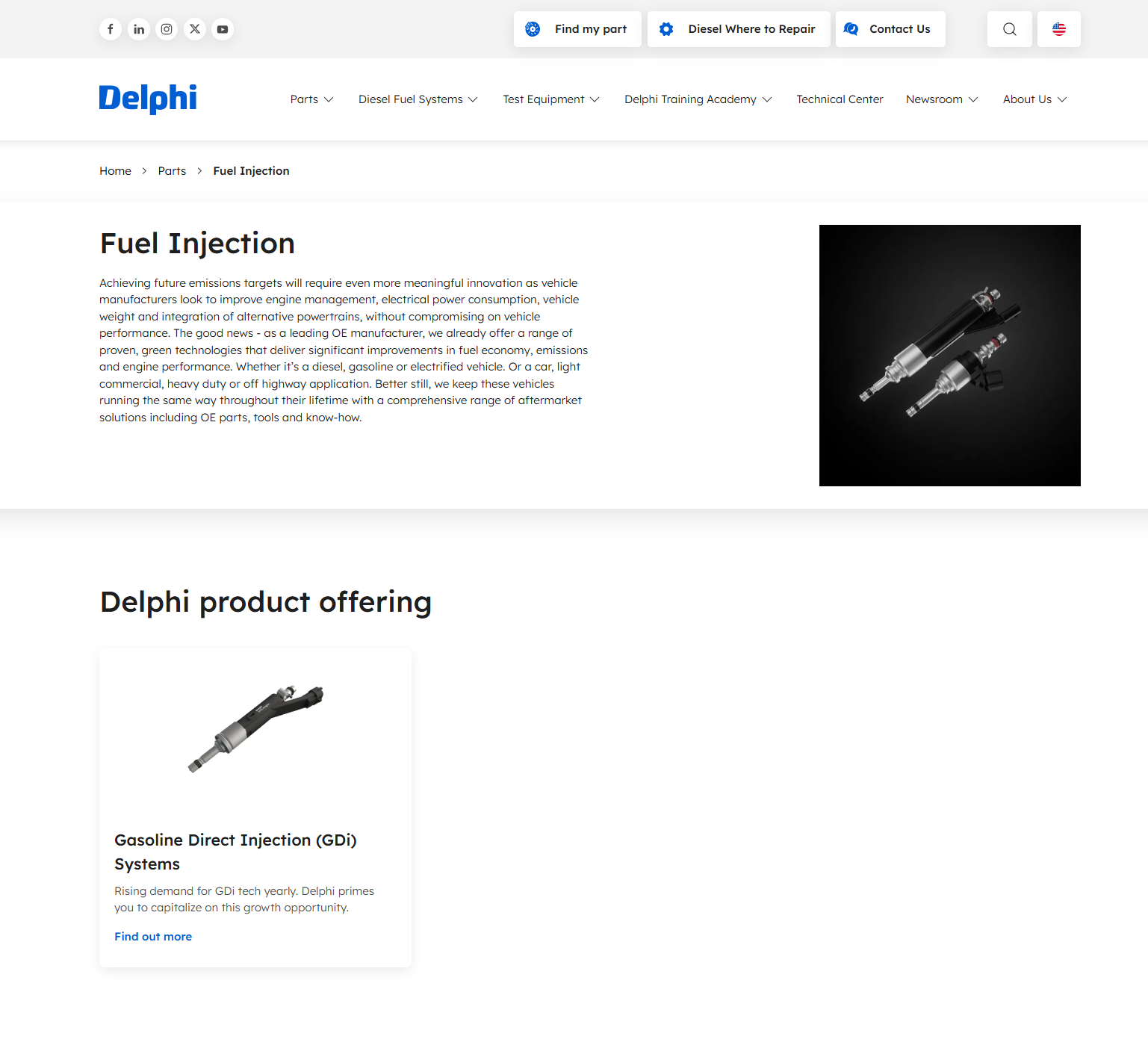
Rebuilt the product pages that serve as the core browsing experience for technicians, mechanics, and distributors looking up Delphi's parts catalog across multiple categories: fuel injection, fuel management, chassis, ignition, power electronics, and test equipment.
- Built dynamic product page templates with TypeScript that consume REST APIs and render category-specific layouts
- Implemented responsive image handling for product photography with optimized loading strategies
- Structured data and SEO metadata generation for each product category to maintain and improve search engine rankings
- Connected product data from PostgreSQL through REST API endpoints, handling filtering, categorization, and multi-region content
3. Main Navigation & Site Architecture
Redesigned and rebuilt the main navigation system for a complex information architecture spanning parts, diesel fuel systems, test equipment, training academy, technical resources, newsroom, and corporate pages.
- Built a multi-level navigation component in React/TypeScript supporting desktop and mobile viewports with accessible keyboard navigation
- Implemented region/language detection and switching (multi-country, multi-language support)
- Created a consistent header/footer system with integrated search, "Find My Part" quick access, and service center locator entry points
4. Frontend Team Leadership
Led a team of 2–3 frontend developers through the migration process.
- Established coding standards, component patterns, and PR review workflows for the new Next.js codebase
- Broke down the migration into incremental deliverables so the team could ship progressively without blocking the live WordPress site
- Conducted code reviews and mentored junior developers on React/TypeScript best practices and Next.js patterns (SSR vs SSG trade-offs, dynamic routing, API integration)